Every client who has motorized shades uses them. Every client who doesn't have them wishes they did. I've never heard someone say "I regret putting motorized shades in." I've heard the opposite dozens of times.
They're not just a convenience feature — they're an architectural element, a privacy and security tool, a significant contributor to HVAC efficiency, and a core part of how good lighting control works.
Why Lutron for Shading
We specify Lutron shading on nearly every project. Their Palladiom and Sivoia systems are built to the same standards as their lighting control — which is to say, they're among the most reliable motorized systems in the market. The integration with Lutron RadioRA and Homeworks is native and seamless. When the lights shift into "sunset" scene, the shades can follow in coordination.
Lutron's motor quality is also notably better than many alternatives. These motors run for years without the hum, binding, or recalibration issues we've seen with other brands. In a quiet bedroom at 6 AM, a noisy shade motor is not acceptable.
Fabric Selection
The shade fabric is a design decision as much as a technology decision. We collaborate closely with the interior designer on every project on this. There are thousands of options across opacity, color, texture, and light filtering quality. The right choice depends on the room's purpose, the light orientation, and the aesthetic of the space.
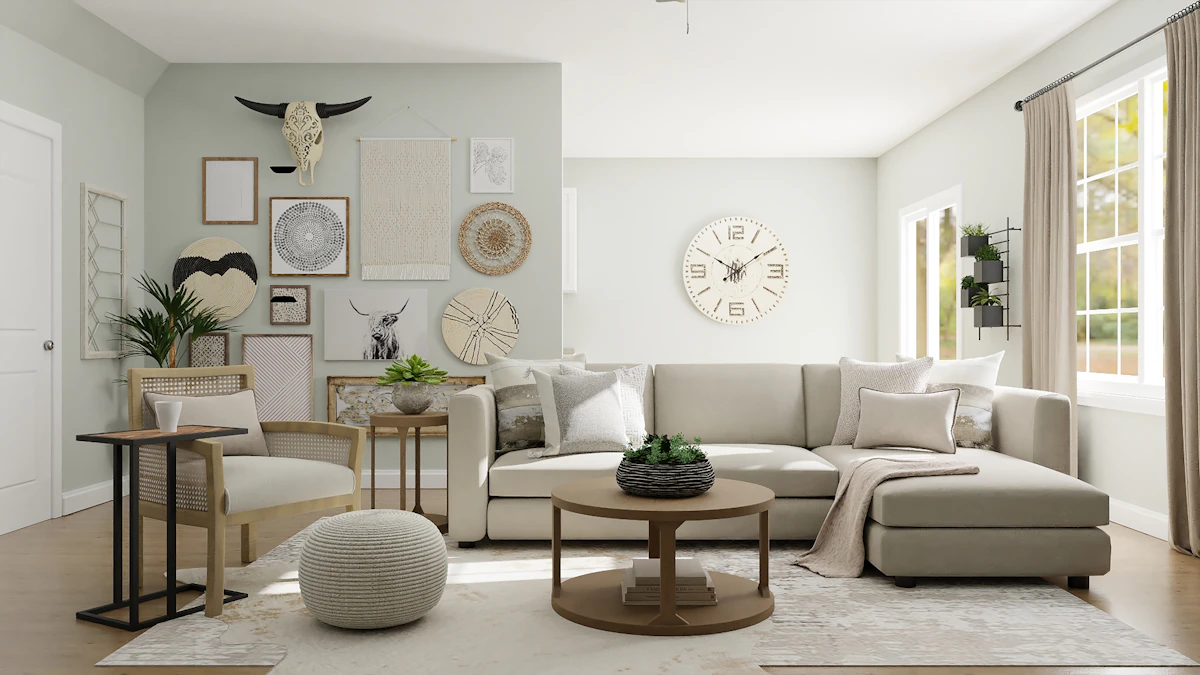
For rooms facing west in the LA sun — which is most of them — solar shades that block heat gain while maintaining views are a smart choice. For bedrooms, blackout is usually the right call for sleep quality. For primary living spaces, there's usually a layering opportunity: sheer solar shades for daytime privacy and light diffusion, blackout rollers behind them for when you want full darkness.
Integration Is Everything
Shades integrated with your automation system behave completely differently from shades with a standalone app or remote. A morning routine that raises the shades in the bedroom at 7:15 while slowly bringing up the lights. A movie mode that lowers all the living room shades and dims the lights simultaneously. An "away" mode that lowers the shades on the south side of the house automatically at noon to cut heat gain.
These aren't novelties — they're things clients use and appreciate every day without even thinking about it. That's when automation is working correctly.
Retrofit vs. New Construction
New construction is easier — you run power to shade pockets during framing and the installation is clean. Retrofit is absolutely doable; Lutron makes battery-powered motors that eliminate the need for new wiring. The battery life is good (12-18 months depending on use frequency) and they integrate with the same Lutron system. We've done full-house retrofits without pulling a single wire through finished walls.
If you have a house full of manually operated shades and you're frustrated by them, there's a clean solution. Give us a call.